

Wilbert “Vampire” Johnson: The Man Behind the Cape
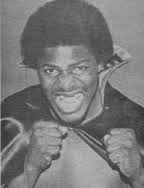
If you were inclined to paint a mental picture of Wilbert Johnson in his prime, think one part Leon Spinks and a similar measure of William Marshall. Leon famously flashed his gap-toothed grin from beneath the hood of his blue sweatshirt on the February 19, 1978 cover of Sports Illustrated after pulling off one of the most momentous upsets in boxing history by winning the World Heavyweight title in a split decision over Muhammad Ali in only his eighth professional fight.
Unlike Spinks, Wilbert lost his four front teeth not in the boxing ring but on the football field, when they were smashed out while playing for his high school team in Middletown, Ohio. The bicuspids on either side of the chasm in Johnson’s mouth happened to curve slightly inward and appear somewhat pointed, giving the impression of a set of fangs.
William Marshall, meanwhile, was a graduate of the New York University arts program and a performer with the renowned Actors Studio who had once served as Boris Karloff’s understudy for a Broadway staging of Peter Pan, earned rave reviews in several Shakespearean productions, appeared in “The Ultimate Computer” episode of the original Star Trek series, and portrayed Frederick Douglass in the 1983 made-for-television movie Slave and Statesman. Nevertheless, Marshall followed in the footsteps of Max Schreck, Bela Lugosi, and Christopher Lee before him and will always be best remembered as the badass bloodsucker in 1972’s low-budget blaxploitation horror flick Blacula and its sequel Scream, Blacula, Scream.
Having once said of himself “I don’t know if there could have been any badder kids than me”, boxing fortunately provided Wilbert Johnson direction in his life which guided him from a misspent youth fighting in the streets to positively channeling his aggression and frustration in the local rec center. While reportedly amassing an amateur record of 130-10, Wilbert would win five Ohio Golden Gloves titles in the late 70s and it was during one of these tournaments that he first came by his mischievously macabre persona. “In the Dayton Golden Gloves, I was cutting people up and there was blood everywhere,” Johnson told the Tuscaloosa News in 1983, “and some guy said ‘hey, he’s a vampire’, so I let it stick.”
He would play it to full effect upon turning pro in 1980, with a fourth round knockout of David Carr in Lexington, Kentucky on the undercard of the eleventh fight of hometown favorite and future WBA World Heavyweight Champion Greg Page. Not content to simply materialize from arena walkways in black trunks with crimson stripes (or vice versa) and flashing that “vampire smile” with great relish at delighted (if slightly taken aback) ringside spectators, Wilbert decided to give an additional transfusion of showmanship to his entrance. “I just thought, I’ve got to do something else with this. So, I made up my cape and me and my manager talked about it and came up with the coffin. When I make enough money,” Johnson had added wistfully, “maybe I’ll get a hearse.”
Wibert had a terrific nickname and the unique ring-walk gimmick to go along with it, was a talented boxer and effective counter-puncher with a sharp left jab and quick right hand, but didn’t possess diligence and perseverance equal to that of his charisma and skillset and, therefore, was frustratingly unable to become greater than the sum of his parts. “Vampire has natural talent, but he’s not dedicated,” bemoaned Johnson’s manager Pete Susens. “He trains but then he smokes and drinks.”
Future WBC Light-heavyweight Champion Donny Lalonde was only four fights into his professional career when he was matched against Wilbert at the Winnipeg Convention Centre on March 6, 1981. “What happened was in the very first round, I caught him on top of the head and broke my first metacarpal and so I had to box very carefully the rest of the fight,” Donny recalled for me via Skype recently. “At the end of the fight actually, I followed him back to his corner just to say ‘good fight’ or whatever and Susens threw a whole bunch of water on him and said, ‘You f’n bum, you could’ve won that fight.’ So, even their side thought they lost. There was some politics happening in my hometown at the time, even with just the four fights I had and the people who controlled boxing in town at the time were trying to build one guy’s son and they didn’t want me to be gaining crowd-pleasing relations because they wanted his son to be the kind of new hero. There was another guy called Wayne Caplette who was on his way out and they wanted to build up this guy’s son. So, they had the judges give the decision to Wilbert and we fought in a rematch. It took seven months because it was a pretty bad break and the doctor didn’t treat it properly. Rather than put a pin in and straighten the metacarpal, he just put a cast on it. He was hung over from the post-fight party and didn’t want to do the surgery the next day and put a pin in like I asked him to. He said ‘It’s a dumb sport anyway, Donny, you should just get out of it.’ So for the rest of my career I had a short index-finger metacarpal which meant the middle knuckle took all the brunt of the punch every time I sparred or fought which caused eventually a split lining in that joint which caused tremendous pain and a lot of lost training time.”
Wilbert kept plenty busy in between his engagements with Lalonde, fighting and winning six times with five knockouts, including three in a thirteen day span that June and two inside of a week the month after. “The second round, I stopped him in the rematch,” remembered Donny. “He was definitely a good fighter. I moved down to Indianapolis and started training at the PAL gym where Wilbert trained out of. Back then, it wasn’t so easy to find out where good sparring was, but I kept hearing the rumors that Marvin Johnson was the meanest guy in the gym. And I figured since I didn’t have much amateur background, I should really get to a gym where I could get a lot of challenging sparring. So, I went to the PAL gym and Wilbert was there, Ronnie Essett trained there, Marvin of course. I walked into that gym with my brother John. The whole gym kind of went quiet because we were the only two white guys in the gym at the time right in downtown Indianapolis. Champ (trainer and former heavyweight boxer Colion Chaney) says to us, ‘You boys lost?’ and I was like, ‘No, I’m here to box Marvin Johnson.’
He started to laugh a lot harder than I was and so were a few of the people around him and he said, ‘Well that can be arranged any day you want.’ Marvin would box anybody but he was out to knock you out, so if you’re going to spar with him, be ready because Marvin just believed that you had to fight to the death for every minute whether sparring or a fight. Wilbert was in there and he was a really nice guy and we sparred and he made me feel a lot more comfortable, and Champ Chaney, and Marvin was great. Sparring he was an animal, he was really good to us, Ronnie Essett, all the guys. So I got to know Wilbert a little bit more as a friend than as a fellow fighter in that time.”
“I don’t know who I’m fighting, but I never do, so I never have to worry,” said Wilbert before his bout with Jim Freeman (15-3, 10 KOs) on February 19, 1983. “I feel okay, but I’m not getting the breaks some fighters are. I’ve won 20 fights with one loss and one draw and some guys are getting title shots when they’re just 12-0. Hopefully, one of these years I’ll get a shot somewhere in there.” Johnson, after knocking his man down four times and cruising to the unanimous decision, said of Freeman that “I hit him with everything but the kitchen sink to the body. I never fought anybody that I hit with shots like that that got back up and fired back like he did.”
Echoing the sentiments sounded above by Pete Susens in reference to Johnson’s physical regimen, Donny Lalonde noted regretfully that “He wasn’t the most committed, he didn’t like doing his roadwork, he didn’t like training so much, he’d be struggling with weight. I think if he had taken it really seriously-and I think you can really see it in the Tite fight-there was a certain level that he was competent at.”
The fight Donny references was against Carlos “The Force” Tite on September 7, 1983 at the Hammond Civic Center for the inaugural USA Indiana State middleweight title which was broadcast on ESPN as were several of Wilbert’s bouts during the channel’s formative years. Carlos was a tough customer and power puncher who went into that night undefeated in 18 fights with 15 knockouts, having won the newly created USA Mid-American and Mid-West middleweight titles six months before and looking for yet another belt. He would earn that strap as well but had a hell of a time doing it as Wilbert took Tite the distance only to come out on the short end of a razor-thin unanimous decision.
“The Vampire Meets The Beast”. I can envision the title even now, splashed like gore across a provocative advertisement for a schlocky midnight-movie but it could realistically have been used not on a film poster but a fight poster when Wilbert Johnson took on John Mugabi in Maracaibo, Venezuela on May 27, 1984 on NBC. The ending came suddenly if anticlimactically when The Beast unleashed a savage second-round left hook which temporarily drove a stake through The Vampire. There is some merit to Wilbert’s claim that, having risen to beat the count, he could have continued and was the victim of a premature stoppage courtesy of referee Enzo Montero. However, given the dominant nature of Mugabi’s 20-0 record coming into the bout-all coming by way of knockout, a streak which would continue until The Beast was finally tamed by Marvin Hagler four fights later-the plotline against The Vampire was all too predictable and merely following a familiar script. And, because Mugabi had already been sniffing around the enclosure of Frank “The Animal” Fletcher, there would be-contrary to Dracula, Blacula, Frankenstein, The Mummy, The Wolfman or any other monster movie franchise-no sequel reuniting The Vampire and The Beast.
Instead, “Vampire” Johnson was left to hope in vain that “Choirboy” Mike Landini didn’t sweat holy water. Landini, a hot middleweight prospect out of nearby Calumet City, acknowledged Wilbert as a worthy adversary that he would need to deal with assertively enough to propel up the regional rankings with national exposure hopefully to follow. Although his right eye was three-quarters closed from being beaten to the punch and terribly outjabbed, Wilbert was able to summon the one big shot he had been reliant upon late in the sixth when he landed a perfectly-timed left hook over Landini’s temporarily dormant right that forced Landini to stumble backward into the corner where Vampire swooped in to follow up with a seven punch combination, the highlight of which was a flush right uppercut. As if he were kneeling on a church pew, “The Choirboy” assumed a contrite pose for five seconds before standing to take the eight count as the round ended. It took Landini until late in the seventh to collect his senses and get his legs securely beneath him but he finished on his feet and was rewarded for his efforts with the split decision win.
Prolonged spans of inactivity and mixed results (3-3 with 1 no decision) would plague Johnson over the last five years of his 29-8-2 career. It is only fitting that Wilbert’s last fight was held on Halloween night 1989, in Indianapolis against Dan Morgan who must have loaded his gloves with garlic cloves, as he knocked Wilbert out in the eighth and last round. The final nail had been driven into the Vampire’s prizefighting coffin but Wilbert Johnson, I am happy to report, is very much alive and well at the age of 59. The crucifix is an object to which his alter-ego may have had an aversion. It evidently is a welcome sight to Wilbert who is an active member of the church back in his home city of Middletown, Ohio. Johnson also holds tight to a vision he may be close to soon realizing of opening a boxing gym named for his mentor Harold Burton so that he can provide the same opportunities to underprivileged children that he benefited from as a “bad kid”.
“Recently, through Facebook, I was able to reconnect with him which was awesome. It’s so nice because so many of the guys over the years, you see how hurt they are and he seems healthy and happy,” concluded Donny Lalonde. “It’s really, really nice for me to see that he is alright because it wasn’t the kind of story you expect to go real well from back in the day because he wasn’t so committed and he wasn’t so educated, that you kind of wondered if he would fall off and fall into harder times. And maybe he did, but ultimately, at this point, he seems fine and it sure is nice to see. He’s in a really good place.”
It would be wise to pause in the maelstrom of adversity which life perpetually challenges and perplexes us with and meditate optimistically upon Wilbert Johnson’s own words spoken back in 1983, in what admittedly seems a peculiar philosophy advocated by a Vampire. “The sun rises the next day anyway.”
Click Here to Order Boxing Interviews Of A Lifetime By “Bad” Brad Berkwitt