

Great British Pubs… The Royal Standard of England in Beaconsfield
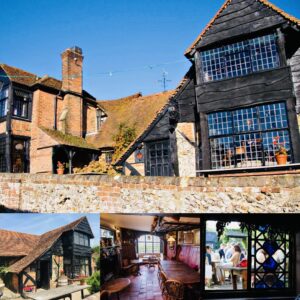
Exclusive Interview by Karen Beishuizen
Photos courtesy of The Royal Standard of England
The Royal Standard of England was founded over 1050 years ago, making it one of the oldest continuously operating pubs in England. The present name, “The Royal Standard of England”, is traditionally linked to King Charles II after the English Civil War. According to local legend, the King rewarded the loyalty shown to his father, Charles I, by allowing the inn to adopt the royal title in 1663. One of the lesser-known stories is that the pub sits beside ancient hidden lanes and hollow ways once used by drovers, smugglers and possibly even highwaymen. The pies are probably the most famous dishes at the pub and have become part of their identity over the years. A favorite drink strongly associated with the pub is Owd Roger, a famously strong traditional ale with deep roots in English brewing culture.
The Royal Standard has appeared in many films and television productions because of its remarkably preserved historic atmosphere. When you visit the pub, you step through a low old doorway into another world. The first thing you notice is the smell of wood smoke, old beams and candles. The ceilings are low, the floors uneven, and the rooms unfold one into another like a medieval maze. People should visit because The Royal Standard is not simply an old building — it is a living piece of English history. For over 1050 years people have stopped here for food, ale, shelter, gossip, celebration and storytelling. As they often say: “This is what a quintessential English pub looks like in your mind.”
KB: When and by who was The Royal Standard of England founded?
The Royal Standard of England at Forty Green near Beaconsfield originated as a Saxon alehouse over 1050 years ago, making it one of the oldest continuously operating pubs in England.
Within the hamlet of Forty Green, the Brewster was the Ale Wife, a Saxon lady who made the best home-brewed ale. Her cottage became the local social center where villagers met, exchanged gossip and traded goods. Over time, her parlor became the pub. Ale was safer to drink than water for many centuries.
The pub survived through the ages by serving refreshments to the ox wagons and drivers hauling locally made tiles down towards the River Thames for transport by barge into London.
The earliest known Saxon name of the inn was “Se Scip” or “The Ship”, and the pub was already well established by the Norman period. Lude Farm, just west of the pub, appears in the Domesday Book of 1086. The Wessex land was confiscated from King Harold Godwinson’s family and given to Remi by William the Conqueror. Remi supplied ships for Duke William’s Norman invasion in 1066.
The present name, “The Royal Standard of England”, is traditionally linked to King Charles II after the English Civil War. According to local legend, the King rewarded the loyalty shown to his father, Charles I, by allowing the inn to adopt the royal title in 1663.
KB: What is a fun fact not many people know about the pub?
It is believed to be the oldest free house pub in England. A free house is a pub that has never been owned by a brewery or pub company — it is independently owned.
One of the lesser-known stories is that the pub sits beside ancient hidden lanes and hollow ways once used by drovers, smugglers and possibly even highwaymen.
A nearby lane called Knaves Hollow was notorious for robberies on the old London road. Coaches climbing the steep hill from Wooburn Moor slowed almost to walking pace, making them easy targets for highwaymen.
There is also a local tradition that the famous Royalist highwayman James Hind stayed at the inn during the Civil War period. Another story claims King Charles I may have passed through the pub in disguise while escaping Oxford in 1646.
And of course, many visitors ask about the pub’s ghosts — especially the drummer boy said to haunt the car park after being killed during the Civil War.
KB: What dish on the menu is a must try for people visiting?
Our pies are probably the most famous dishes at the pub and have become part of our identity over the years.
We focus on traditional British comfort food cooked slowly and properly, using local ingredients wherever possible. Beef dishes are especially popular and we have long worked with small independent farmers known for exceptional quality meat and old breeds such as Belted Galloway cattle.
Visitors often say the food tastes like proper old-fashioned home cooking — rich, hearty and comforting — the kind of food your grandmother would proudly serve, which suits the atmosphere of the ancient pub perfectly.
KB: What is a favorite drink people must try?
A favorite drink strongly associated with the pub is Owd Roger, a famously strong traditional ale with deep roots in English brewing culture. Many of our beers are brewed locally in the Chilterns.
When Timothy Dalton was filming “Hot Fuzz”, he said he missed proper English ale like he used to drink as a young man in Manchester. He told us he could not get anything quite like it in Los Angeles where he lived, so we quietly slipped him a pint of local Chiltern ale on set.
The Royal Standard has always celebrated local traditional real ales and country beers. Historically the pub supplied strong ales to railway workers and laborers, and old stories say the ale was so strong it became legendary in the area. In those days, drinking beer was how workers replaced calories lost through hard manual labor.
KB: Which famous people have visited the pub over the years?
Over the centuries the pub has welcomed everyone from royalty and politicians to musicians, actors and television presenters filming here.
King Charles II is closely associated with the pub through local legend, while the local MP and statesman Edmund Burke also has connections to the inn.
In modern times visitors have included:
• Ozzy and Jack Osbourne
• The Hairy Bikers
• Various actors and film crews from many productions
• Writers such as Enid Blyton and Terry Pratchett, who both lived nearby in Beaconsfield
The pub’s atmosphere has always attracted creative people, storytellers and lovers of history.
KB: In which series and films has the pub appeared?
The Royal Standard has appeared in many films and television productions because of its remarkably preserved historic atmosphere.
Film appearances include:
“Practical Magic 2” (2026)
“The Theory of Everything” (2014)
“Summer in February” (2013)
“Will” (2011)
“The Boys Are Back” (2009)
“Three and Out” (2008)
“Hot Fuzz” (2007)
Television appearances include:
“Too Much” (2025)
“3 Body Problem” (2024)
“Mary and George” (2024)
“Afterlife” (2023)
“The Essex Serpent” (2022)
“Susan Calman’s Grand Day Out” (2021)
“The Hairy Bikers’ Pubs That Built Britain” (2016)
“Ozzy & Jack’s World Detour” (2016)
“Endeavour” (2012–2018)
The pub has also appeared several times in “Midsomer Murders”.
KB: I step inside the pub. What do I see? Walk me through it.
You step through a low old doorway into another world.
The first thing you notice is the smell of wood smoke, old beams and candles. The ceilings are low, the floors uneven, and the rooms unfold one into another like a medieval maze.
The Candle Room glows with candlelight reflected against dark oak beams and antique brassware. There is a huge curved settle beside an ancient fireplace where people have gathered for centuries to drink ale and tell stories.
In the King Charles Room you see old fireplaces, portraits, hidden corners and a tiny concealed chamber above the room linked to Civil War legends.
Every wall carries layers of history — old prints, armor, strange artefacts, horse brasses and objects collected over generations.
Yet despite all the history, the atmosphere is warm rather than formal. Dogs sleep beside the fire, locals chat over pints and the pub still feels alive rather than preserved like a museum.
KB: Why should people visit The Royal Standard of England?
People should visit because The Royal Standard is not simply an old building — it is a living piece of English history.
For over 1050 years people have stopped here for food, ale, shelter, gossip, celebration and storytelling.
The pub sits hidden among ancient lanes and woodland in the Chiltern Hills, surrounded by the same landscape that once saw drovers, Civil War soldiers, highwaymen and wandering travelers pass through.
Visitors come for:
• The atmosphere
• The history
• The fireplaces
• The food
• The real ale
• The ghost stories
• The feeling that the past is still somehow present here.
As we often say:
“This is what a quintessential English pub looks like in your mind.”
Every pint poured adds another page to our story.
For more information check out The Royal Standard of England’s website: HERE
Click Here to Order Boxing Interviews Of A Lifetime By “Bad” Brad Berkwitt