

1980s TV Shows: A Trip Down Memory Lane with… Carl Lumbly (Marcus Petrie in “Cagney & Lacey”)
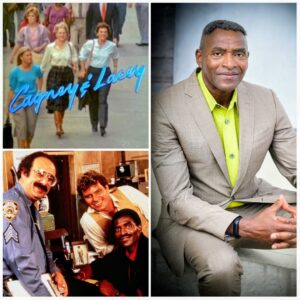
Exclusive Interview by Karen Beishuizen
Photo credit Russell Baer
“Cagney & Lacey” was a police drama series that aired on CBS from 1982 to 1988. It ran for 7 seasons. The show was about two female police detectives in New York, Christine Cagney and Mary Beth Lacey, played by Sharon Gless and Tyne Daly. Cagney was a single woman with focus on her career and Lacey was a married working mother. For their roles Tyne Daly won four and Sharon Gless won two Emmy Awards. Carl Lumbly played Detective Marcus Petrie for the full 7 seasons, including the pilot. His partner on the show was Victor Isbecki, played by Martin Kove.
KB: “Cagney & Lacey”: What was the show about?
I think “Cagney & Lacey” was a show about gender equity and feminism, and what it might look like as the rubber met the road. It gave voice to a reality that was already being lived in the United States where, increasingly, women were freeing themselves from traditional and limited ideas about the ‘weaker sex’, long imposed by the patriarchy. It deftly side-stepped the question of whether women could do the ‘job’ as good as a man and chose instead to accept that fact as a given. Its weekly assertion was that they could do the’ job’ as good as a woman. Same car, different driver. The show was embraced because they were exemplary as police officers and compellingly open and vulnerable as people. There was a song somewhere in and around that time, “I am woman, hear me roar, in numbers too big to ignore.” And, as in nature, lionesses are the best hunters.
KB: How did you get the part as Detective Marcus Petrie?
I got the part of Marcus Petrie through the standard audition process. At the time, I was living in New York, doing theatre, and living my best young life. Getting a part on a TV show, or feature film work was a perk. It meant a much bigger paycheck than one received in the theatre. Those checks were guaranteed rent money, sometimes for months, from a single gig. So, “Cagney & Lacey” was a television pilot, which meant there was a chance it might be picked up for more episodes and, perhaps but unlikely, a series. I took my place in that casting session with a group of other actors, waited my turn, went in and auditioned for the producers (I believe they videoed my audition), and left. About a week later, I learned I had been cast, and the show would shoot in Toronto, Canada. I think the shoot was three weeks or a month, then back to New York, bulging with rent money. I believe the character’s first name was Ronald in the pilot.
KB: What did you like about the character and how did you make it your own?
I think I liked the fact that, since I was the first and only one to play Petrie, I liked him because he was mine. He was serious, sincere, ambitious and confident. He was on the force, with aspirations to, at some point, move from law enforcement to a law practice. I also liked the fact that his story did not depend on him having come from a deprived background. He was articulate and educated. If he had street smarts, it was because he was observant and capable, not because they had been earned through life in the ghetto. I liked Petrie because the assumptions that were usually applied to a black man on television could not be made about him. Like Cagney and Lacey, Petrie was self-defined, not self-conscious. He was mine from the first day I put on one of his tweedy, nerdy sport jackets.
KB: Did you and the others get some sort of police training to make acting look believable?
There was a police consultant on the show who kept us apprised as to procedures and practices within the precinct house, and we did “ride-alongs” with police officers who gave us a sense of what the day looked like on patrol. They also taught us how to hold a weapon, “command attitude”, and examples of situations they had encountered, and how their training was vital to their getting back home at night. I think it was having access to their experiences that helped bring believability to what we did.
KB: How did a week on the set looked like from getting the script to filming?
Basically, we received scripts every week. Usually, sometime in the final day or so of the current episode, we received the rough draft for the next episode. We would have a reading of the new script at lunch, giving the writers and producers a chance to hear what it sounded like and receive ideas and reactions from the cast, some of which would be reflected in the second draft. By the time we got to the next week of shooting, we would get a second or third draft to begin shooting, with script revisions coming as necessary, right through the shooting of that episode. Depending on the story, Petrie generally worked three or four days of an eight-day shoot.
KB: Where was the show filmed?
The show was shot in a studio location created in East Los Angeles. It was a converted factory near an animal shelter. Fun fact. No significance.
KB: Do you have a favorite episode on the whole show and why this one?
My favorite episode was the one where Petrie had to deal with the professional, psychological and personal consequences of having shot a young black youth. Full disclosure. I really liked the storyline and thought I had done a good job with Petrie’s handling of the situation. But, much more importantly, the actress cast as my wife, Vonetta McGee, became my wife and partner for the next twenty-eight years. So, I have an understandable bias.
KB: Are you still in touch with the other actors like Martin Kove, Sharon Gless and Tyne Daly?
I’ve stayed in touch with Tyne Daly from point to point. I consider Tyne a mentor, teacher, guru, friend. Martin Kove and I have probably run into one another a time or two over the years. I haven’t seen Sharon since the reunion show we did some years ago. But they all take up residence in my heart, as that experience is one of my treasured memories. I learned a great deal about my chosen craft and my capabilities as an artist on that show.
KB: Looking back now would you have played Detective Marcus Petrie differently?
No, being honest, I played him the only way I knew how. If I were playing him today, we both know a lot more about life, but it’s what we discovered together that formed Marcus Petrie, and I wouldn’t and couldn’t have changed a thing. I was very proud of our journey together.
KB: How do you explain that this show is still so beloved even after 40+ years?
Beyond the quality of the acting – Tyne and Sharon, in particular – and the effectiveness of our work as an ensemble, with distinctive characters woven into a believable unit, I think it is the sincerity and honesty of the writing that makes the exploration we were undertaking familiar and compelling for an audience. I think the show posed real questions about change and growth that feel familiar and allow an audience, in any era, to find their own answers. The best art does that.
Tyne said something on the set any time a director asked her if she wanted another take. She said, “If you ask me if I want another take, I will always say yes because I believe that anything you do once, you can always do richer, deeper, fuller and better. I’ll always want to do another take.” I carry that with me as a simple encouragement in my work and life. “Richer, deeper, fuller, better.” Right?! -Carl Lumbly
Click Here to Order Boxing Interviews Of A Lifetime By “Bad” Brad Berkwitt