

Q&A With Author Charles Salzberg
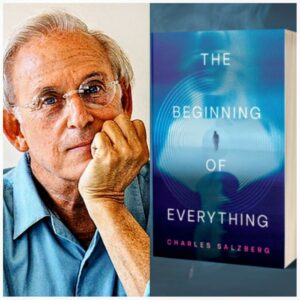
Exclusive Interview by Karen Beishuizen
Photos courtesy of Charles Salzberg
Charles Salzberg is an American author of crime novels. So far he has written ten novels, three novellas and a number of short stories: the Henry Swann book series, non-fiction about sports, and anthologies. He was nominated three times for the Shamus Award. His novel “Second Story Man” won the Beverly Hills Book Award. His latest was published on 15 July: “The Beginning of Everything”. Being a life-long New Yorker, Charles resides in Manhatten.
KB: Did you always wanted to be a writer growing up?
Ever since I can remember, I wanted to be a writer. I was very shy as a kid and reading was a way for me to enter other worlds. We lived in an apartment house on the Upper East Side of Manhattan and on the ground floor, there was a Rexall Drugstore, in which there were racks of paperback books. When I’d come home from school, I’d go straight to those aisles. It was my own, private library. It’s where I first saw a copy of J.D. Salinger’s “Catcher in the Rye”, and Saul Bellow’s “Seize the Day”. And that’s where I was most likely to spend my money. I wanted nothing more than to one day see a book with my name on it on one of those racks. In fact, I began writing my first “novel” when I was 12-years-old, after learning how to touch-type in junior high school (one of the prerequisites for skipping 8th grade, was taking this class and, looking back on it, it’s probably the most important, useful class I ever took). Several years ago, when I was packing up to move to a new apartment, I actually found the first three or four, single-spaced typed pages of what was essentially a roman a clef that took place in a sleep-away camp. I haven’t had the guts to read it yet, but I will.
KB: Who were your literary heroes as a kid?
Different heroes at different ages, of course. I do remember the first full novel I read. It was a football themed book called “The Winning Forward Pass”. I actually own two, hardcover copies of the novel, which was probably written in the 1940s. Later, my literary heroes were a little loftier. I know this might sound a little (or a lot) pretentious, but it’s absolutely true and you can see why if you refer to the question above. Saul Bellow and Bernard Malamud were at the top of the list. And then, when I read “Goodbye, Columbus” and “Portnoy’s Complaint” in my mid-teens, I added Philip Roth to the list.
KB: What is your favorite subject to write about?
Right now, I’m only writing crime novels, but what I really see them as are novels about people’s character, not crime. By that I mean I don’t write traditional murder mysteries. In fact, of the ten novels and three novellas that have been published, as well as a number of short stories, very few of them have murders in them. And in a couple that do, like “Devil in the Hole” and “Swann’s Last Song”, the murders that propel the story happen before the book begins. Instead, I focus in on “smaller” crimes, crimes we’re more likely to become victims of—I mean, how many of us have family or friends who’ve been murdered in “Swann Dives In”, you’re not sure what the crime is until half-way through the book and by the end of the book, you’re not even sure there was a crime. Probably the biggest influence on my writing is a TV show I watched religiously as a kid: “Naked City”. Most, if not all the episodes focused on people, not crimes.
KB: Is there a subject you would love to write about but never dare too or were afraid too?
Not a subject—I don’t think anything’s off-limits for me to write about. But I will tell you what I shy away from: writing about violence and/or romance. And the only reason is, I just don’t think I’m very good when it comes to writing about those subjects, so I do my best to avoid them.
KB: You have written fiction and nonfiction books: Do you have a favorite you wrote and why this one?
The only reason I wrote nonfiction was to make a living. That explains why once I didn’t have to depend on my writing to pay the rent, I vowed never to write a nonfiction book again, a promise I’ve held to. But, while I was writing nonfiction, my favorite book is probably “From Set Shot to Slam Dunk: An Oral History of the NBA”. It was toward the end of the 1980s and when I realized that the NBA began in the late 1940s, I realized many of those players were still alive. So, I found a dozen or so of them and interviewed them about what it was like to play professional basketball in those days. The funny thing is, whenever one of those players passed away—I think only one is still living—I’d get a mention on the obituary page of The New York Times. So, I have the dubious distinction of having my name on the obituary pages of the paper without dying.
KB: Your latest novel “The Beginning of Everything” came out on 15 July: How did the writing process go and what is the book about?
I almost always start either with a character or a premise. In “The Beginning of Everything,” it’s what would it be like if you had a form of ESP, where you could have visions of something that happened or was happening? Once I knew what was going to plague one of the main characters, I had to come up with a story using that situation. I should say that I’m the kind of writer who has no idea what’s going to happen on the next page, or even the next paragraph. So, once I knew what I was going to write about, I created a character who has this ability but is both frightened and embarrassed by it. So, he tells no one—except it comes out accidentally while talking to his best friend one day. So, his friend is the only one in the world who knows he has this “ability.” And when the friend’s college-age stepdaughter comes up missing, he asks his friend to please help find her. And that’s what propels the novel.
KB: Why should people read your books?
What a loaded question! I can tell you why they shouldn’t read my books. If they’re looking for traditional mysteries, there are many other books and writers they should read. But if they’re looking to read about us, about human nature, about the fallibility we have, about what drives us, then I think they’ll (hopefully) enjoy reading my books.
KB: What are you currently up to?
Because my new novel came out in July, I’m doing what most of us writers hate to do: promote, trying to convince readers they should pick up a copy of our book, read it, and then recommend it to their friends. But I have started a new crime novel—I don’t have a title yet—and I can’t even tell you what it’s about, because I don’t know anything more than the first scene, which sets the novel in motion.
Check out Charles’s website: HERE
Click Here to Order Boxing Interviews Of A Lifetime By “Bad” Brad Berkwitt