

Animal Stories Across the World: The Johannesburg Wildlife Veterinary Hospital in South Africa
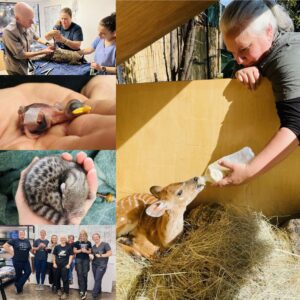
Exclusive Interview with Dr. Karin Lourens
By Karen Beishuizen
Photos courtesy of Johannesburg Wildlife Veterinary Hospital
The Johannesburg Wildlife Veterinary Hospital was founded in 2017 by Dr. Karin Lourens and two others. They focus on small to medium-sized indigenous South African wildlife species. Depending on the time of year, the hospital admits between 75 and 100 animals per week, sometimes even more during the warmer months when wildlife activity increases. The majority of injuries are related to human-wildlife conflict, including domestic animal attacks, vehicle collisions, and illegal wildlife trade. The hospital encounters illegal wildlife trade cases on an increasingly frequent basis, with approximately half of their admissions linked to this issue.
A typical day begins with hospital rounds, where the veterinary team discusses every patient in detail – their condition, treatment plans, and rehabilitation progress. The day then includes a combination of clinical work, surgeries, new admissions, and administrative responsibilities. The hospital offers structured internships for students enrolled in relevant tertiary programs such as veterinary science, zoology, or conservation. These internships are designed to provide meaningful, supervised experience over a minimum two-week period. As a non-profit organization, they rely entirely on donations to operate. Financial contributions are the most effective way to support their work. Alternatively, supporters can contribute by purchasing items from the hospital’s wish list or by helping to spread awareness about responsible wildlife interactions and conservation.
KB: Describe to the RSR readers when and by who the Johannesburg Wildlife Veterinary Hospital was founded?
The Johannesburg Wildlife Veterinary Hospital was founded in 2017 by myself, together with two other directors. Since then, the hospital has grown significantly, and I currently continue to lead and manage the facility and its operations.
KB: Which animals do you treat at the hospital?
We focus on small to medium-sized indigenous South African wildlife species. These animals do not have owners, and many general veterinary practices do not have the specialized knowledge or facilities required to treat them, which is where our hospital plays an important role.
KB: Where are the animals coming from?
Our patients come from a wide variety of sources. These include trauma cases (such as animals caught by cats or hit by cars), relocation cases, confiscations related to illegal wildlife trade, and referrals from other veterinary practices, rehabilitation centres, and conservation organizations.
KB: What kind of injuries do you treat?
The injuries we treat range from relatively minor conditions, such as wounds or soft tissue injuries, to much more severe cases. These can include fractures, head trauma, and injuries sustained during illegal wildlife trade or prolonged captivity, which are often both physically and physiologically complex.
KB: How many injured animals come in on a weekly basis and how are they injured?
Depending on the time of year, we admit between 75 and 100 animals per week, sometimes even more during the warmer months when wildlife activity increases. The majority of injuries are related to human-wildlife conflict, including domestic animal attacks, vehicle collisions, and illegal wildlife trade.
KB: Daily work at the hospital: what does this look like?
A typical day begins with hospital rounds, where the veterinary team discusses every patient in detail – their condition, treatment plans, and rehabilitation progress. The day then includes a combination of clinical work, surgeries, new admissions, and administrative responsibilities.
In addition to clinical duties, we are actively involved in combating illegal wildlife trade. This includes preparing reports and appearing in court as expert witnesses in wildlife crime cases. The work is varied, fast-paced, and often unpredictable.
KB: Illegal wildlife trade in South Africa: how do you combat this and do you see it at the hospital coming in as a patient?
We encounter illegal wildlife trade cases on an increasingly frequent basis, with approximately half of our admissions linked to this issue.
Our role extends beyond clinical care – we are often involved from the point of confiscation through to the legal process. This includes providing expert testimony in court and contributing to sentencing, particularly in aggravation, to help ensure that penalties reflect the severity of these crimes.
KB: What is the saddest story that happened at the hospital?
One of the most heartbreaking cases involved a pangolin named Fortune. He had been subjected to severe cruelty, including the removal of all his front claws. As pangolins rely entirely on their claws to feed, this injury made rehabilitation and release impossible.
Despite our best efforts, we had no option but to humanely euthanize him. It was an incredibly difficult case, and one that has stayed with me emotionally for many years.
KB: What is the happiest story that happened at the hospital?
There are many positive outcomes, but one that stands out is a nyala named Quix. She was incorrectly hand-raised by members of the public and arrived at our hospital in a critical condition.
We were able to stabilize and rehabilitate her, and she was later successfully released into a suitable habitat with an existing nyala herd. She integrated well, and within a year she had successfully bred in the wild. This is a powerful example of successful rehabilitation and release.
KB: What makes it so special working for the hospital?
The hospital represents a long-held vision of creating a facility dedicated entirely to wildlife. What makes it particularly special is our ‘full-circle’ approach – from treatment and rehabilitation to release, and even involvement in conservation and legal processes.
It is incredibly rewarding to know that our work contributes not only to individual animal welfare, but also to broader conservation outcomes.
KB: How can people volunteer and what does this work look like?
We have unfortunately discontinued short-term volunteer, job-shadow, and community service programs due to the demands of our clinical workload and the need to prioritize patient welfare.
We do, however, offer structured internships for students enrolled in relevant tertiary programs such as veterinary science, zoology, or conservation. These internships are designed to provide meaningful, supervised experience over a minimum two-week period.
KB: What can people do to help the hospital?
As a non-profit organization, we rely entirely on donations to operate. Financial contributions are the most effective way to support our work, and we are able to issue tax certificates as a registered public benefit organization.
Alternatively, supporters can contribute by purchasing items from our wish list or by helping to spread awareness about responsible wildlife interactions and conservation.
For more information about the hospital and how you can help, check out the website: HERE
Click Here to Order Boxing Interviews Of A Lifetime By “Bad” Brad Berkwitt